By Jump Trucking Insurance
Digital Thieves Don’t Need Crowbars: Cargo thieves aren’t just cutting locks anymore — they’re cutting into your load board.
Cargo thieves aren’t just cutting locks anymore — they’re cutting into your load board.
According to the American Transportation Research Institute (ATRI), a new kind of crime wave is sweeping through the trucking industry: strategic theft. It’s theft by deception, and it’s growing fast.
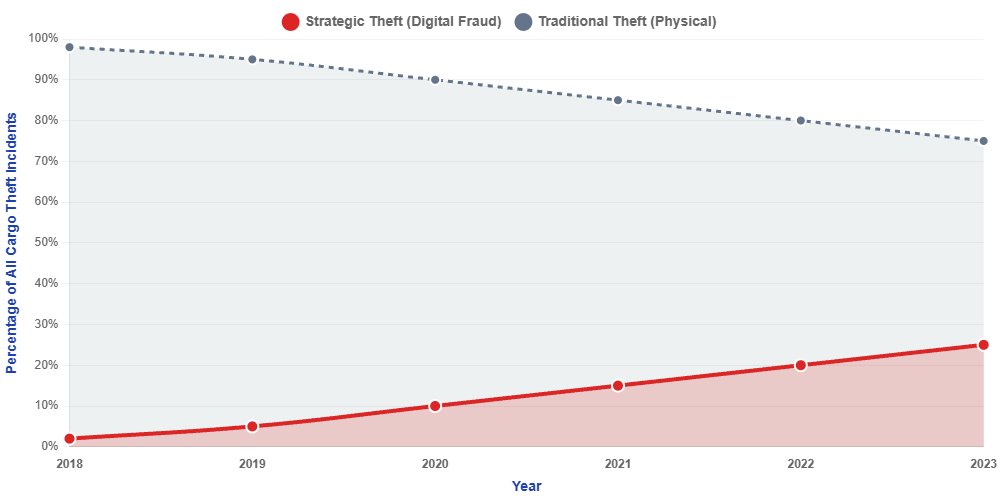
In just five years, this digital form of cargo theft has exploded from 2% of incidents in 2018 to 25% in 2023. Thieves no longer need to break into your trailer — they just need to break into your email.
What Is Strategic Theft?
ATRI defines “strategic theft” as fraud-based crime using fake carriers, identity theft, and double brokering to hijack legitimate loads.
Here’s how it often plays out:
- A thief poses as a legitimate carrier on a load board.
- They accept a shipment under a stolen or fabricated MC number.
- A real, unsuspecting driver picks up the load — and delivers it to the wrong destination.
- By the time the shipper realizes what happened, the cargo (and the payment) are long gone.
It’s not just happening to large carriers. Smaller regional fleets — often without full-time dispatch or IT security teams — are prime targets.
Why It’s Growing So Fast
The trucking industry’s digital revolution has been both a blessing and a curse. Online load boards, instant rate confirmations, and electronic bills of lading have made freight faster and more efficient — but they’ve also opened new doors for fraud.
According to ATRI, thieves are exploiting weak points in digital verification:
- Stolen or “aged” MC numbers make fake carriers look legitimate.
- Fraudulent email domains (like @chrrobinson.com vs. @chrobinson.com) trick dispatchers.
- Phishing links in fake 3PL signups steal login credentials.
- Double-brokering scams reroute loads through multiple intermediaries to hide the paper trail.
As one case study in ATRI’s report showed, an entire truckload of premium vodka was stolen through a fake brokerage chain and never recovered — even after reports to the FBI and multiple state agencies.
The Hidden Costs of “Invisible” Theft
Strategic theft might not involve breaking a lock, but it breaks trust — and that costs fleets real money.
Here’s what ATRI found:
- The average cargo theft loss for motor carriers is $29,108 per incident.
- For logistics service providers (LSPs) like brokers, that jumps to $95,351 per theft.
- Once indirect costs (lost time, customers, and insurance hikes) are added, total impact can exceed six times the stolen value.
A single digital theft can wipe out a month’s profit for a small fleet — or worse, cause an insurer to reassess your entire risk profile.
Spotting and Preventing Strategic Theft
The best defense isn’t just technology — it’s awareness and discipline.
Here’s how fleets can protect themselves from digital scams:
- Verify MC and DOT numbers — Don’t trust what’s on the load board. Use the FMCSA portal to check that contact details match the posting.
- Look for mismatched domains. Example: @chrrobinson.com (valid) vs. @chrrobbinson.com (fraud).
- Never share verification or MFA codes. No legitimate broker will ever ask.
- Watch for “too good to be true” rates. Over-market pay is a classic bait tactic.
- Educate drivers and dispatchers. Teach them to slow down before clicking, signing, or confirming.
And if you do fall victim — report it to CargoNet, TIA Watchdog, or FMCSA Fraud and Identity Theft programs immediately. The faster data is shared, the less chance thieves have to hit others.
Insurance Implications
Insurers are watching this trend closely. Some carriers now require documented cyber-hygiene practices before offering coverage on high-value freight.
Policies may include conditions like:
- Requiring multi-factor authentication (MFA) for dispatch accounts.
- Proof of carrier vetting and geofenced tracking for certain commodities.
- Adjusted deductibles or exclusions if fraud protocols aren’t followed.
The good news? Fleets that implement these protections often earn better pricing and fewer claim disputes.
From Crowbars to Keyboards: The New Era of Cargo Crime
Strategic theft proves that modern cargo crime isn’t about brute force — it’s about information.
Criminals can steal your freight without ever touching a truck, but fleets that stay vigilant can shut them down just as fast.
At Jump Trucking Insurance, we help carriers combine smart coverage with practical risk control, so when thieves go digital, your protection goes deeper.