By Jump Trucking Insurance
 California Tops the Charts in Cargo Theft: But So Do These Hidden States
When most folks think of cargo theft, they picture Southern California warehouses and ports — and they’re not wrong. California consistently leads the nation in the raw number of theft incidents. But if you only watch the West Coast, you’ll miss fast-rising hotspots across the country where thieves are getting bolder and smarter.
The latest American Transportation Research Institute (ATRI) findings show that while California remains the #1 state by incidents, risk is spreading along key freight corridors — through the Mid-Atlantic, Great Lakes, Southeast, and key intermodal hubs. If your routes touch these areas, it’s time to tune your playbook.
Why “Where You Run” Matters More Than Ever
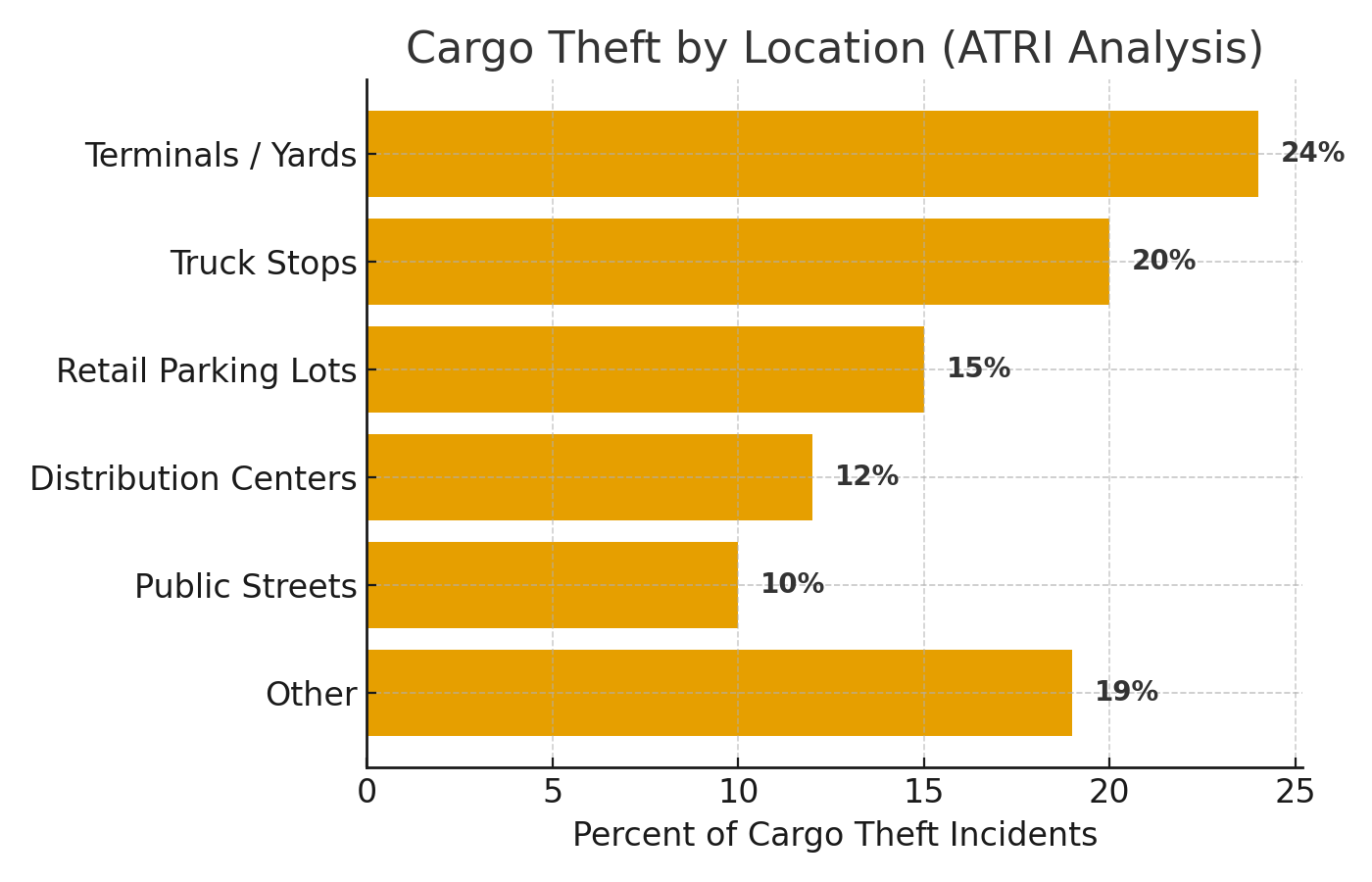
Cargo theft isn’t evenly distributed. It clusters where freight is dense and security is inconsistent: near ports and rail ramps, in big metro areas, and at handoff points (terminals, DCs, truck stops, retail lots). That means your lanes, parking routines, and appointment windows play a huge role in your exposure — regardless of fleet size.
- Coastal Gateways: California’s ports and sprawling distribution networks make it the perennial hotspot.
- Freight Hubs & Rails: Chicago/Gary, Northern New Jersey/NYC, Atlanta, Dallas–Fort Worth, and Memphis see concentrated activity due to intermodal volume and transient traffic.
- Corridor States: Increasing incidents along I-10, I-40, I-70, and I-95 suggest thieves track predictable overnight stops and weekend staging.
The bottom line: theft risk now follows freight density + soft security — not just a single state.
The “Hidden” High-Risk States
You might run fewer loads in California and think you’re safe. But ATRI’s state-indexed views (which consider theft relative to freight volume) highlight other states that punch above their weight. Historically, states like New Jersey, Illinois, and Pennsylvania surface near the top on a per-freight basis — and parts of Georgia, Florida, and Texas show similar patterns around major metro corridors and rail ramps.
What this means for dispatch: it’s not enough to ask “Do we go to California?” The better question is “Where do we stage, fuel, and sleep?” Those location choices can swing your risk by orders of magnitude.
What’s Being Targeted in These Regions
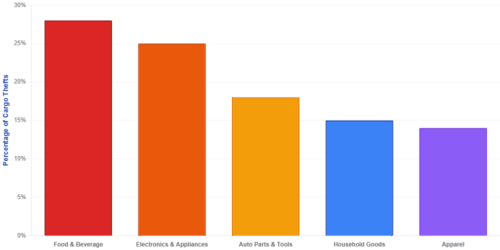
Across major hotspots, thieves prefer whatever is fast to move, easy to fence, and hard to trace:
- Food & Beverage: Perishable, high demand, limited serial tracking.
- Electronics & Small Appliances: Compact, high value, strong resale markets.
- Auto Parts & Tools: Easy to mix into legitimate supply chains.
- Household Goods & Apparel: High volume, broad distribution channels.
Pilferage (seal cut, a few pallets gone) remains a big piece of the loss picture. It doesn’t always trigger a large claim — but it erodes margins and damages shipper trust just the same.
Route-Aware Risk Controls (That Don’t Slow You Down)
Use your lanes as your checklist. The goal is not to drive scared — it’s to drive smart.
1) First-200 Rule:
Avoid stopping in the first 200 miles after pickup, especially around known theft corridors. Many theft crews tail a load from origin and strike at the first rest.
2) Park with Purpose:
Choose well-lit, staffed locations where possible. If staging near rail ramps or DC clusters, favor secured lots (fencing, cameras, access control) and avoid long weekend sits.
3) Appointments & Timing:
Schedule pickups so the first leg ends at a secure site, not a random lot at 1:00 a.m. When possible, time deliveries to minimize idle dwell.
4) Seal Discipline:
Track seal numbers on BOLs and in ELD notes; verify at each handoff. Even simple tamper-evident locks can deter opportunistic pilferage.
5) Geofencing & Breadcrumbing:
Enable real-time GPS + geofencing alerts on high-value loads (auto-notify dispatch on long stops, route deviations, or after-hours door events).
6) Mix the Routine:
Vary parking locations and fuel stops within a metro area. Predictability is a thief’s best friend.
How This Lowers Your Insurance Friction
Underwriters pay attention to where you run and how you manage those routes. Bringing route-specific controls to the table can:
- Support better cargo terms or lower deductibles for sensitive commodities.
- Reduce disputes with clear seal logs, GPS breadcrumbs, and geofence alerts.
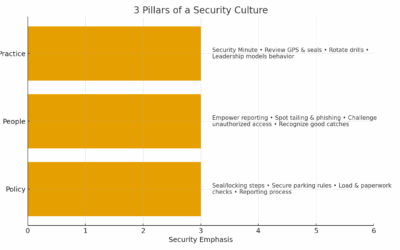
- Improve renewals by demonstrating a repeatable security culture — not one-off fixes.
Pro tip: Show your agent a one-pager at renewal with (a) your top 5 lanes, (b) your parking/secure staging partners, (c) your seal and tracking protocol, and (d) a brief incident log with corrective actions. That’s how you turn “we’re careful” into evidence.
Playbook for Smaller Fleets (5–40 Power Units)
You don’t need a security department — just repeatable habits:
- Pick 3 “safe harbor” stops per key lane (and share them in driver notes).
- Create a “red zones” map for dispatch (rail ramps, metro clusters, lots with prior incidents).
- Set auto-alerts on loads over your chosen threshold (e.g., >$50K or electronics/spirits).
- Train quarterly on staging, paperwork checks, and first-200 discipline; keep sign-in sheets.
- Document everything (photos of seals, BOL checks, parking receipts) — it pays off at claim time.
California Still Leads — But Your Risk Is Local
California’s headline numbers are real. But theft risk is now a national pattern tied to freight density and weak security nodes. If you run through Chicago, the Northeast, Atlanta, DFW, Memphis, SoCal, or South Florida, your best defense is route-aware discipline and strong staging habits.
At Jump Trucking Insurance, we help fleets turn practical controls into better coverage stories — so your routes stay profitable, even through the hotspots.